Saturday, 21 February 2015

Evaluation - Q7

7)Looking back at your preliminary task, what do you feel you have learnt in the progression from it to the full product? 

The purpose of the preliminary task was to get familiar with using the camera equipment and software Final Cut Pro x, and gain knowledge and experience before making our thriller. Also, it was to help us get used to creating the shots needed that I would be using in future in my opening thriller sequence. Before this task, I didn't know how use the equipment such as a tripod as I'ver never come across it, but this task helped me gain understanding on how to use it properly. This task help establish who in my group was best at taking control of the equipment and filming so that when filming our thriller it would be to our best standard.

What I learnt from the preliminary task, was how to screw on the camera to the tripod securely. Before, I didn't even know that there was a scroll and simply thought you'd have to just place the camera on top of the tripod. However with the explanation from my teacher in lesson, I took in the information on how to attach the camera on the tripod, and easily performed this whilst shooting the mini clip. Another thing I learnt from this task was how to make the camera not blurry, this was a technique again taught by my teacher. What I had to do to make the camera focus and not blurry was put a sheet of paper in front of the lens so that it focused more onto it and remove the blurriness. Furthermore, I've learnt that different camera shots give different meanings and feelings towards the audience. For example, a over shoulder shot establishes that the person in front of the camera is talking to the person who's shoulder is being shot from. This shot is commonly used when theres a conversation, alternating the view between the different speakers. 

The skills I've learnt through this task was how to set up the camera; this was useful and made the filming process quicker when actually filming thriller. Also, Ive learnt how to create the different types of shots of cinematography e.g for a panning shot, you need to place the camera onto the tripod in a fixed position and adjust the suitable height of the tripod, then use the handle to move the camera side to side. This shot followed the moving object or person whom walks across the frame. Moreover, I've learnt how to use the software Final Cut X Pro, which was used in the editing stage of both the preliminary task and thriller. Specifically, from this task i've gained the skill of trimming and placing clips into order, so that the full video flows easily. The skills i've learnt in this task were all contributed into my thriller by me and my group members, as we all gained more knowledge and understanding on how to use the equipment and software needed for editing for the final outcome of our thriller. 

Evaluation - Q6

6) What have you learnt about technologies from the process of constructing this product?

Evaluation - Q5

 5)- How did you attract/address your audience? 


I used a variety of methods to address my audience which lead to my primary and secondary research I gathered. The primary research I collected was essential to my production as it gave me an insight of what my audience looked for within a thriller in person. The methods I conducted to gain the results were through a questionnaire that I asked my target audience and Vox Pops; an act of filming an interview with members of public through a media device. Both tasks were very interesting and helpful as it allowed me to see what my target audience really thought about what they wanted in a thriller face to face. Also, they could elaborate more with the Vox Pops making my research more valid and reliable to refer to. 

The research I carried out to create my thriller film was analysis's of thriller films on my blog, film certificates, narrative theory and the questionnaires. 
Firstly, I researched into the BBFC (British Board of Film Classification) which is an independent, non governmental body that classifies cinema films and videos/DVDs. In the research I learned the different types of age certificates for films and what their guidelines were. What I found through this was that thriller films were mostly classified as a 15. This was because unlike horrors that are rated 18 and start their movies with either strong violence, strong adult themes or extreme gore.This was not the aim for thrillers as they're about creating suspense instead of making the audience feel scared of their being. 
Secondly, I made a series of blogposts showing the different types of ways thrillers were conventional in each micro element to gain more in depth understanding of the genre. For example, I had a blogpost of an analysis of the ways sound was conventional to a thriller in the film The shining. 
Another, source of research I carried out was the different types of narrative theories,these included Propp, Todorov and Aristole. After learning about the different theories, I decided that my narrative suited the Aristotle theory like most thrillers do because It included an incident, dramatic question, character goal, protagonist and antagonist, a resolution and elements of sympathy and empathy. 

The research was helpful especially when planning my thriller opening as it gave me more of an understanding of the genre and ideas on what to include in my thriller. An example of a inspiration I took from the research and included in my thriller was from the film Halloween. The opening scene for Halloween started with a flashback of the antagonist killed his sister. This inspired me to include a flashback at the beginning of the my thriller however, it was just a glimpse of the antagonist childhood of how he was alone. 

All the primary and secondary research assisted with my planning as it helped me develop ideas on what to include in my thriller to make it successful and conventional to the genre. 

Evaluation - Q4

4)Who would be the audience for your media product? 


Having a target audience is essential because when making a media product, you need to know the guidelines and specifications that you have to follow, in order to make your product suitable for your audience. Also, having a target audience helps with your research on whats applicable and well suited for your media product for it to be successful. The task I was given was to make a 2 minutes opening thriller sequence that follows the conventions of the thriller genre well. Before the planning and filming stages, I had to research in depth into the different types of thrillers and see what was conventional and also what I could include in my own. Without a target audience, I wouldn't have an idea on how I would want my narrative to be because there would be no one to make it for. Target audiences are the people that you need to help make your film successful and earn a good profit. 

For my thriller; Humanity off, I decided that my target audience would be the age certificate 15. I chose this because I think children under the age of 15 would find some of the themes quite frightening and disturbing which would not be appropriate for them. For example, in my opening theres a brief exposure of blood seen when the victim is on the road dead. Also, the reason why I did not chose my thriller opening to be rated an 18, was because they often have disturbing themes and their opening sequences usually start gory, this would not be my aim as i am making a thriller and thrillers are all about creating suspense and shock to the audience not making them feel very scared.

There are many aspects that my thriller appeals to my target audience of 15 and above. Firstly, the narrative itself appeals to the audience as its a psychological thriller which is very common nowadays. Also, because of the theme being common, the audience know what to expect as they've seen successful psychological thrillers, that may be similar to mine. Furthermore, the choice of characters in my film are conventional to the genre and also they're roughly the same age as my target audience. This appeals to them as they can relate to the characters e.g the female victims as they're stereotypically represented as gullible, innocent and naive, which makes the audience sympathise them and place themselves in their positions. To accompany this, the use of Mise en scene, through the female victims costumes of outgoing clothes, appeals to the audience as it gives them a sense of realism which makes them relate to the girls. 

When it comes to sound, I used a variety of sounds that helped the thriller achieve the suspense, shock and surprise in the audience. An example of a sound that I believe appeals to the audience is a non-diegetic sound that is heard when Josie finds her friend laying in the middle of the road dead. The use of the upbeat, chase scene like soundtrack helps emphasise the horror josie is witnessing and makes the audience feel on edge and want to find out more on whats happening. 

Moreover, the cinematography used gave the audience an understanding on whats going on and what emotions they need to feel in the moment. For example, I used a extreme close up which appeals to the audience as its quite intimidating and also, creates suspense as they see the antagonist suddenly open his eyes in anger. Also another example that appeals to the audience is when theres a point of view shot where Josie is in the forest and turns around to see the masked antagonist in her way and starts screaming. This gives them a huge adrenaline rush as the camera shot puts them into her position and also the scream emphasises both the audiences and girls shock.

The editing styles I included in my thriller helped make the video flow and also create the 3S's (shock,suspense and surprise). An example would be the reaction shot seen when Josie hears a scream. This shocks the audiences as well as mirror her feelings too.

overall I believe that my opening thriller sequence appeals to my target audience, because I included the suitable conventions that would make them interested in watching the rest of the film.


Friday, 20 February 2015

Evaluation - Q3

3) What kind of media institution might distribute your media product and why?

Tuesday, 17 February 2015

Evaluation - Q2

 2)- How does your media product represent particular social groups? 

First of all, in order for a thriller film to work, it'll need certain types of characters included to make the audience follow the narrative. The two types of characters thrillers often use are an antagonist and a protagonist. The antagonist would be one of the main characters in the film as thrillers use them to create suspense and tension within the audience as they are the villain and a threat to the other characters. Whereas the protagonists, known as the hero’s and victims, are the characters that unfortunately face the dangers of the antagonist and try to stop them or escape.

In my thriller opening sequence, I was inspired to use the same character representations as the ones in the film Scream 3. My antagonist was male, who wore dark clothing to blend with the dark setting and he wore a white mask, like the antagonist did in Scream so that he would not be identified by his victims. This would appeal to my audience as the use of him hiding his identity, intrigues them to find out why he does making them want to carry on watching the film to find out the conclusion of this.  Firstly, the antagonist is represented as manipulative as he tricks the girl to thinking his hurt or something as he mysteriously lays in the middle of the road. The use of this manipulation shows that he's got a smart mind and knows how to trick his victims gaining the dominate status in the situation as his capable of this. Secondly, another representation of the antagonist is that his secretive performance of hiding his identity with a mask to his victims is intriguing and weird. This makes the audience suspicious on what his going to do next as you cannot tell what his feeling as his facial expressions cannot be seen through the mask. Additionally, the antagonist is represented as frightening as we see in my thriller, the two girls screaming twice both off screen, when they see him. This emphasis his powerfulness and his spookiness, as both times we hear the screams from the girls we don't know what his done to scare them. I included this so that it could Lead to the audience feeling apprehensive when they see him and also curious as they would want to know what his done.
 One of the clear representations of the antagonist is that he is a male. I chose this as it was stereotypical to the thriller genre as well as to the gender because men are seen as stronger, and dominant due to a patriarchal society, implying that their more capable of doing such things due to power. This dominance is seen when the victim is in the forest trying to run away then, turns around to see the antagonist standing in her way; who is quite tall. 
This character would appeal to the audience as his roughly the same age as them; target audience 15+, this makes them relate to the character more and feel afraid of him as his in their age and is capable of doing such horrible things. Reason why the antagonist in my thriller would appeal to them also, is because of his abnormality of laying in the middle of the road randomly. This intrigues the audience and draws them in as its unusual to see someone just randomly lay in the middle of the road for no reason. 

In contrast, my thriller consisted of 2 protagonists who were victims of the antagonists dangerous motives, and they wore outgoing clothes to convey where they were coming from and what they're doing. A representation of one of the girls was her blonde hair. She was chosen because of the stereotypes of blonde girls being 'dumb' and vulnerable. In my thriller, she was portrayed as careless and gullible as she decides to approach the stranger on the road, even though she was in a drunken state. Also, my victims were represented as careless, as we see this when the two girls are at the bus stop and Josie decided that they should not wait for the bus and just walk home instead. This shows she's careless as they're clearly intoxicated and instead of waiting for public transport she wants to walk where theres hardly no one about. Another representation of the girls is that they're hormonal as Josie picks up her phone call and totally ignores her friend who is clearly upset about her ignoring her that she starts to walk away from her. The fact she didn't tell her to stop, shows her stubbornness and unawareness of the dangers that may happen if they were to split up even when their in a drunken state.

Gender is represented in a stereotypical way as the victims are females who are portrayed as naive, young, oblivious and innocent. These characteristics help make the thriller more realistic as the target audience can relate to what the girls are doing, as they're stereotyped to be these aspects.
 The two female characters would appeal to my target audience as their young and similar to the audiences age (15+), so it's easy for them to relate to them. Furthermore, due to their innocence, vulnerability and age, this appeals to the audience as they know these aspects would interest the antagonist as the victims are usually like this in the thriller genre. Also, The contrast between the two is that the antagonist has his identity hidden which creates enigma and suspicion in the audience, however the girls are normally dressed in what people would wear in reality, this gives a sense of realism and makes the audience want to watch on as they can relate to her because of her clothing.

Evaluation - Q1

 1)-In what ways does your media product use, develop or challenge forms and conventions of real media products? 


When researching the generic conventions of the thriller genre through my blog posts, i've found that theses were used to create an impact for the audience whilst watching the films. Most thriller films include the three S’s ; Shock, Suspense & Surprise, as well as building tension to engage their audience with watching the film. More specifically the conventions that really stood out for me were : the character representations (a antagonist and victim), low key lighting, isolated setting, hidden identity, iconography, enigma and these were all used through cinematography, eerie music & sounds and editing. 

Firstly, without this convention there would be no story as you'll need something/someone to follow through the narrative. Characters are essential not only in thrillers but every genre films. In the thriller genre the stereotypical characters included are form the Aristotle narrative theory; which are an antagonist & protagonist. When researching thrillers, I found that the protagonists (victims) where often females who were young and have so much life ahead of them. The reason why females are used as the victims in thrillers is because they're seen as innocent, weak and vulnerable. Moreover females in the thriller genre tend to be oblivious to whats going on and gullible in sticky situations leading the audience to relate and sympathise them. An example of this stereotypical representation of a female victim in thrillers is from the film Scream 3 - shattered glass scene. Through the use of mise en scene, her costume was a pink jacket and a colourful top, these girly aspects connotes her innocence. The normal clothing worn by the female is conventional as the audience can relate to her costume because it creates a sense of realism, making them feel suspicious and tensed. In contrast, antagonists vary depending on the type of thriller however frequently they all have some of the same characteristics. An antagonist in a thriller is seen as the 'bad guy' and is a character that is focused on in a mysterious way in the film. The antagonists tends to be a male as men are seen as stronger and more capable to do the dangerous activities they do. Male antagonists portray dominance and powerful due to a patriarchal society,  this shows that they're in control of the situations the victim faces and is likely to win the battle. You can identify an antagonist in the thriller genre through mise en scene like the victim, with their costume. Antagonists often wear dark clothing to connote a dark atmosphere which is conventional as it creates suspense and tension within the audience and film. In the film scream, the antagonist wears a full length black robe and a mask when seen by his victims. Also in the movie, the costume is considered common and easily purchasable making identifying the buyers difficult and creating the possibility for anyone to be the killer. This is conventional as it creates suspense and tension within the audience because they do not know who the antagonist is behind his costume.


Another generic convention in the thriller genre is the use of low-key lighting.This convention creates enigma and tension as the characters in the scene; mainly victims, and audience cannot see clearly whats going on making the whereabouts of the antagonist unnoticeable. We see this in the film Scream 3 in the scene where the female is trying to run away from the masked antagonist. As the antagonist is wearing all black clothing, the lighting helps eliminate seeing him as he camouflages with the surroundings due to lack of light. Low-key lighting here is used to focus on the victim who's trying to get away with the help of her facial expressions of being scared, builds a closer relationship with her as the audience can relate to her emotional state as they're apprehensive about her fate and also the antagonist capturing her. This helps engage the audiences attention, as they'll continue to watch to get more of an understanding of whats happening when all is revealed with more light later in the scene which is conventional to the thriller genre as it creates shock. 


Iconography in the thriller genre is essential as it creates tension and helps foreshadows whats going to happen in the scene. The generic convention within iconography in a thriller, is always a murder weapon; often a sharp object and these are usually quick to access from the antagonist depending on the setting. The most common murder weapon used by antagonists is the Knife, which is seen in the thriller opening of Halloween and also the signature weapon for the Ghost Face in the film Scream. Firstly in the opening of Halloween, through a point of view shot we see the antagonist enter the kitchen and pick up a knife from a drawer. This alerts to the audience that the antagonist is fearless as he is in someones home and also shows his determination of his goal because his not afraid of accomplishing it as his in control of the murder weapon. Likewise could be said for the Ghost Face in the film scream as they use the weapon to gut, throat slit and stab their victims, showing power and control. 


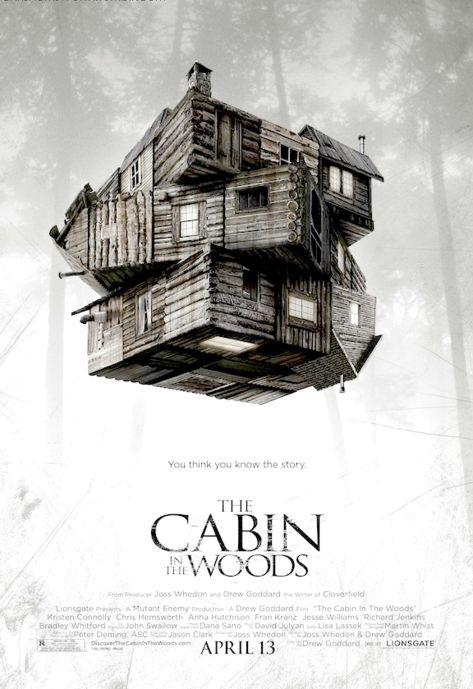
The setting in any film is very important as it helps inform the audience what type of genre it is. In the case of a thriller, the setting tends to be in isolated places such as abandoned houses, forests etc. This makes the audience feel apprehensive and nervous on what is going to happen which is conventional to the thriller genre as its aim is to create suspense,tension and shock. An example of this vital convention is shown in the film ' The Cabin in the woods'. The title of the film is quite self explanatory as the film is about 5 friends that go to an isolated cabin in the woods for a weekend vacation. The fact that they're in the woods, indicates that there is going to be something or someone dangerous there as woods are isolated, big places where its hard to find help. The use of the isolated setting makes the audience feel on edge and intrigued to see whats in the woods so they'll continue to watch the film to find out what is there and whats going to happen to the characters that are staying there. 

In most thrillers, theres bound to be a handheld or point of views camera shot used at some point of the film. Whether its a shot from a character or object this camera technique has a huge impact on the audience. In the opening of the film Halloween, the scene is shot from the perspective of the antagonist through a point of view shot. The use of this shot allows the audience to connect and have an insight of the antagonists activity. As the character is controlling the frame and leading what the audience are seeing, this creates suspense and tension as they don't know what is going to happen. This is conventional as it helps create enigma within the audience and engage to the film to find out what is going to happen to the character behind the camera and their surroundings. The person behind the camera of a point of view shot can differ to be the victim as thrillers often use this camera technique when the victim is looking around their surroundings for the antagonist or someone else. The panning, point of view shot effects the audience as they feel like their in the film and also makes them feel on edge as their not in control of what their seeing. As its a thriller genre, they'd expect something to pop out somewhere whilst this shot is occurring, provoking suspense and shock when something does appear. 


Michael Myers - Halloween 
A generic convention in thrillers, is a antagonist that has a hidden identity. Whether this is a mask or just simply a point of view shot, thrillers often never show their antagonists unless its the end of the film. The use of the antagonist having hidden identity is so that is conceals who they are provoking tension and suspense when they're seen on the screen or by the victims. In the films Halloween, Strangers and Scream all the antagonists are masked through the use of iconography of a mask. This eliminates showing their facial expressions and emotional state, suggesting that they don't want to be seen or just want a consistent impression to show that their not normal. This intimidates their victims and also the audience as they are suspicious to know who is behind the masked costume, creating tension when ever they see the antagonist, making them feel uncomfortable. 

When planning my thriller opening sequence, me and my group tried to include as many generic conventions as possible that fitted with our narrative, to make it more unique. 

Firstly, we used the generic convention of low-key lighting throughout the whole scene except the beginning which was a flashback. The flashback of the young boy swinging on the swing used was quite brightly lit, but also in black and white to convey that it was in the past. However, for the rest of the sequence it was low-key as the time of day was the evening so it was dark, this was to minimise the detail seen, creating enigma within the audience. 


Little boy on the swing 
I had 4 settings within my thriller consisting of a park, road, forest and bus stop. Firstly, the flashback was located at a park and through a midshot it showed a swing that was sequently moving then being used by a young hooded boy who's identity cannot be seen. This was conventional as thrillers, tend to use children as characters that are mentality and emotionally unstable, foreshadowing that this child is not safe to be around. Secondly, the bus stop setting was used to convey that the two girls were on their way back from somewhere as they sat at the bus stop waiting for the bus impatiently. As bus stops are for public transport, when the girls are seen there it is isolated because its night time and very few people are out at that time. When Josie suggests to walk home instead of waiting, the setting changes to the road where the antagonist is laying down on. This foreshadows that something is going to happen to the girls as they've reached to the location where the mysterious boy is creating suspense within the audience. Meanwhile, after Josie receives a phone call, she pays no attention to shona who suddenly starts to walk away and head towards the direction where the antagonist is laying down. After finding her friend dead on the floor, Josie starts to run away from the scene and heads to a forest, where she believes she'll get away from the mysterious boy(antagonist). The use of the forest as a setting is conventional as the character is nowhere near possible help when needed, so if she was to get hurt no one would be able to help her. This creates suspense and tension within the audience and also makes the sympathise with Josie, as they know something is going to happen to her as its a thriller and she's in a isolated location where the antagonist is still on the loose. 


Street Camera of the two girls at bus stop
Following the generic convention of having an antagonist and protagonist(victim), my thriller had a male antagonist and two female victims in the opening sequence. My characters were stereotypical as the genders of the two representations followed the aspect of characters within a thriller, also my female characters were played well to being clueless and oblivious on whats going on. For example, Josie suggesting to Shona to not wait for the bus stop, but instead to walk even though their in a drunken state and alone together. This shows that she's careless and not weary about what dangers can happen to her if she walked home. Moreover, Josie is seen as careless again as she loses interest of her friend by picking up a phone call and completely ignoring the fact that Shona is walking away from her. This is conventional to the thriller genre, as girls seem to be more intrigued to find out who's with them resulting of them asking ' who's there?' when they hear or see something strange. This shows dramatic irony as the audience knows that theres an antagonist about as its part of the genre but also the girl doesn't know that she may be in danger. Foreshadowing that something will happen to her, as she's too oblivious to realise that its not safe to be alone. 


POV shot of Shona walking towards body 
In my thriller opening, we used the generic convention of a point of view shot twice from both of the girls perspectives at different times. The first point of view shot was seen when Shona was walking towards the antagonists body to check what was wrong with him. The use of this shot captured the drunken state that she was in by showing her feet only, and capturing her unstable movements as she walked towards the body. This made the audience feel apprehensive and frightened on what could happen to her because the frame was jerky reflecting on how she was currently.
POV of starting point of panning Josie's perspective 
Her unstableness and lack of awareness foreshadowed that she was in danger by walking towards him. Furthermore, the second point of view shot was used differently, this time it was shot at a eye level when Josie is in the woods and looking around for the antagonist. The use of this shot, creates suspense and tension because the victim is in control of whats being seen. Also it made the audience feel on edge as they do not know when the antagonist is going to appear as they restricted with just her perspective. 


Lastly, the generic convention I also included in my thriller, was the use of iconography; a white mask, for the antagonist to wear when approaching his victim. The white mask contrasts his dark clothing which emphasises his hidden identity. This helps the audience establish that he's the antagonist creating fear within the audience and also shock as this is the first time both the victim and audience see him with a mask on. We see him with the white mask through the point of view shot from Josie's perspective in the woods when she turns to find him in her way. 


My groups opening sequence defines the thriller genre by including the codes and conventions such as: male antagonist, female victim(s), low-keylighting, isolated settings and hidden identity through a mask. Overall, the whole sequence built a story and created suspense throughout even when it ended with these elements. In terms of the micro elements; mise en scene, sound, editing and cinematography, my thriller sequence defined the genre well. 
In terms of Mise en scene, firstly we used iconography of a mask, to hide the antagonist identity so that he would provoke the shock element. Moreover, we used the iconography of a phone to show that Josie was busy whilst not listening to what Shona was saying. Also in this part of the scene, we caught shona's facial expressions through the use of an over shoulder shot before she started to walk away. This shot showed shona as annoyed and angry at Josie, because she wasn't paying attention to what she was saying so she took matters to her own hands and walked away from her friend.
The sounds used varied in my thriller depending on what was going on in the scene. In the flashback, we added a non-diegetic sound of a child saying " come out and play with me" this was repeated and connoted the child seen on the swing as mysterious and dangerous due to the tone of the sound. When the girls were seen at the bus stop and at the road, the sound used was diegetic sound of their dialogue. Without the dialogue, the audience wouldn't of understood what was going on so it was essential we had this as it helped them engage more and pay attention to the information the characters were saying to help build the narrative. Another sound we included in our thriller was a non-diegetic soundtrack which was quite upbeat and suspenseful. This was used when josie discovered shona's body on the floor until the end of the sequence, this sound was used for the chase scene and to create suspense and tension as the audience would want to know what happens next. 
The micro element editing was included in my thriller to define the genre, an example of this was a reaction shot. This was seen when Josie's hears a scream and she jumps and gets scared which could relate to the audience as they may be as shocked as she is. 
Cinematography was a key micro element to define the thriller genre as it helped the audience understand the characters more. For example, in the flashback theres a mid shot of a little boy swinging on a swing alone at the park. As his positioned in the middle of this shot, this emphasises his aloneness and suggests that he is troubled or dangerous, making the audience feel curious about his character and wanting to find out more. 

To show more understanding of the generic conventions and developing of a real thriller, I have compares my thriller opening sequence to the film ' Scream (1996)'.  The film is a bout a masked killer that begins killing teenagers in the small town Woodsboro. One young girl and her friends realise that the number of deaths go up, to survive they must follow the rules of horror movies. Firstly, the similarity between my thriller and this film, is the fact that they both include the iconography of a mask for the antagonist. However unlike, Scream my film starts with the audience knowing who the antagonist is behind the mask instead of him hiding it at the beginning. This is because we decided to let the audience know who the antagonist, but fear him even more when his identity is hidden and feel on edge when he's among his victims that done know who he is. Secondly, in comparison to the film Scream, both settings are located at a town where its isolated. The fact that the town Woodsboro is 'small' this implies that theres not many people there, meaning that the victims of the Ghost face wouldn't be saved easily. This is similar to my thriller, as mine is set in a quiet town also and the girls are seen on a road where no one else is to be seen but the antagonist, implying their alone and their safety is at stake. Also, what i found that was similar between my thriller film and Scream opening was that they both used the generic convention of having a female victim. This was conventional as it achieved the sympathy from the audience needed to connect with the characters as they are portrayed as gullible and oblivious. An example of this from scream is that the antagonist would call the girl and ask her questions about horror movies and what she's doing. This is seen as vulnerable as she immediately goes against not talking to strangers but carrying on the conversation with the antagonist on the phone. In my thriller, the gullible female character who's fed up of waiting for her friend who's on the phone, decides to walk towards the antagonist who's on the road. This shows her innocence and careless motive as she's walking towards a stranger she doesn't know and is oblivious to the fact that he may harm her.  Finally, like in any other thriller, theres low-key lighting and in my thriller and the film Scream this is used. In the opening scene for scream, the low-key lighting is used when the character Drew is on the phone having a conversation with an anonymous person. She's in her house but the lights are very dimly lit. The use of this low-key light emphasises her aloneness and that something dark is going cave in on her, foreshadowing her death that happens later. Similarly, throughout my opening scene thriller, it's set in the night so theres already low-key lighting. The use of this is conventional as the audience and girls cannot see much detail of where they're going and who's there. This emphasise their danger and foreshadows that something may happen to them as its night time, easy for the antagonist to hide. As my task was to make an opening thriller and not a full film, it was clear that my thriller would have less conventions than Scream. However the generic conventions I included helped provoke the 3S' s (shock, surprise and suspense), making the thriller intriguing to carry on watching to find out the conclusion of the whole film. 

AS Evaluation

My brief for my AS media coursework, was to make a short two minute thriller opening of a film. The members of my group were myself, Ella Hutchins and Rishika Sohal, we all had different kinds of roles allocated to produce our thriller opening scene. 

I was the screenplay writer, director and producer, this was because as whole we all agreed to follow my narrative which made sense if I took on these specific roles. Rishika was allocated the roles as Director or photography and the Editor, this was due to her success on editing our opening credits that we planned and the use of camera skills in the preliminary task. Lastly Ella was given the roles MES coordinator and Music Producer, this was because of her ability to visualise the purpose of iconography and costumes within a film and also the way she looks into depth when describing certain sounds. 

I believe the roles I took on were suitable for me and quite easy to do as I am an experienced drama student and Ive learnt before how to direct and create a piece of drama.  The roles I was given was simply to direct and produce our opening thriller., so I was responsible on guiding the actors and film crew what to do whilst filming. Also the producing of the thriller was very helpful as it taught me how to create something step by step using the camera for help. Directing the thriller has taught me all the things you need to be aware of whilst filming and how a director should approach with any difficulties. 


 I believe my group did work well together, but obviously we had a few downfalls of some of us missing lessons, but this was easily resolved as we would inform those that were missing what we did through the communication outside from school. Overall the work atmosphere between us all was very easy going, as we all knew each other anyways so it was  easy to communicate well with them. Do I think we made a successful thriller? yes I do think we made a successful thriller, this is because our narrative for the opening tells a story itself that the audience can easily follow. Like the inspiration from the film Halloween, we also started our thriller with a flashback, this was because we thought that a flashback will give the audience a small part of a characters past (in our case the antagonist). Also our thriller demonstrates many conventions of the thriller genre, such as hidden identity for the antagonist,  low key lighting, female victims and male antagonist, dark clothing and blood etc. In this evaluation ill will be exploring the many ways how I've developed my planning to make sure my thriller was successful.

Wednesday, 4 February 2015

Humanity Off - Final Cut


West hatch High School Centre No. 16807
Jemimah Ali - Candidate No. 9002
I worked alongside with:
Rishika Sohal - Candidate No. 9155,
Ella Hutchins - Candidate No. 3085

Saturday, 3 January 2015

Rough Cut - Miss Georgiou


Audience feedback is very important to a production as it allows the group to analyse the strengths and weaknesses within our opening thriller sequence. Also the feedback from our target audience (15+) gives us an opportunity it iron out all the flaws and problems with our production, which will help us decide on the changes and improvements that will need to occur when finalising the final cut of our thriller opening. 


Youtube Comment 
How me and my group received our audience feedback from our target audience was through numerous of actions. Firstly, in our lesson we screened our rough cut to the whole class and go verbal feedback from our peers on what went well and how we can improve later on. Furthermore, our teacher concluded the overall feedback from everyone in the class and informed us the final evaluation of our thriller rough cut of what she thought was conventional to the thriller genre and what we could improve on to make our piece successful. This was very helpful as the members of our class group were apart of our initial target audience, so it was very intriguing to see what they had to say about our thriller opening as it was suitable for them mainly. Secondly, we all individually asked members of family and friends to view our thriller on the website, Youtube and asked if they could view, like or comment below on our video on what they believed went well and what we could improve on. This was very supportive to our feedback as it was quick and easy to see what they had said, also it gave us a clear, constructive response for improvements that shall be made in our thriller opening. 

I believe the feedback given to us would benefit our production, as it helped us acknowledge the parts of the sequence were we need to have a look at and improve on and also what worked well in our thriller that should stay the same. Moreover, it allowed us to see how our thriller looked from another person perspective and what they thought of it, as we have become so used to watching it ourselves. The feedback we have received will help benefit the film industry as well as it helps us make adjustments to our productions so that they are given our best thriller opening to sell to

our audience. 


Youtube Comment 
Our main positive feedback was firstly from the members of our class in our verbal discussion of our thriller, and they all agreed that the standards of the acting in our thriller was very good. This advantage was very good as they believed the acting made the thriller look more realistic to the real world, so the audience could relate to what was happening to the characters within the film. Secondly, a youtube comment stated that our thriller " being shot at night and a isolated street made the characters more vulnerable, typical to a thriller". This clearly shows that the setting and low key lighting we had set our thriller in was conventional to a thriller as even a member of the audience pointed it out. Also this made our narrative more understandable as it made sense what the girls were doing and why they were out at night. In the screenshot below, the pros that we received was that the "flash back was good, and built great suspense", I believe this was because of the filter and sounds we included to make the atmosphere eerie to give the suspense we wanted. 


Youtube Comment 
Our constructive feedback were that there was a bit where the girl is running away, we could hear background noises of people talking whilst filming, which they believed was quite distracting. This was noticed before we even told people to watch the video, but as it was rough cut, when editing the final product we will either include a sound to go over that part or even re film it to improve it. Furthermore, there was a minor delay where the antagonist was opening his eyes, the audience said that it needed to be sharpen, and one person even suggested we added mascara to the actor to make his eyes more bolder on camera. We agreed with this and decided that we will re film this part, to make it more effective as it should be as it is an important part of the thriller which needs to stand out more. Also, the credits at the beginning should not have as much effects on them as its quite distracting, especially on the street view camera as theres too much to look at on the frame. And lastly, our teacher said that the ending needs to be more sharpened as she felt it ended too quickly, this was when the victim is looking up to see the antagonist standing in her way. In the rough cut the ending seemed rushed and it did not give the audience the effect it should have, to inform them that this was the end of the scene and also that it was left on a cliff hanger. 

Overall, after reflecting back on the audiences feedback given to us, we have concluded that there will be changes made to our thriller due to the comments received. What we will change in our thriller, is obviously the part where the girl is running away as we wouldn't want to keep background speech in our thriller as that will be unprofessional. In order to over come this flaw, we will re film this part and make sure everyone behind is silent or we will just mute all sounds from the video and add a sound on top instead. Another change will be enhancing the antagonist costume and make up, to make him look more dangerous and eerie. We will achieve this by re filming his parts and having the MES coordinator, Ella apply make up e.g mascara to make his eyes bolder, like the comment suggested we should do. In addition, from the feedback we received a comment stated how we should put less effects on the credits as its distracting, so we have decided to decrease the amount of effects on the credits and also remove the credits that were scene at the bus stop scene, so that the audience can focus only at the characters and they're doing. Moreover, the ending will be slowed down using the editing software Final Cut Pro x so that we can achieve our goal of suspense and curiosity at the end as the thriller does end on a cliff hanger. When we get back, we will come together and make all the changes needed to make sure our final opening thriller is successful and up to our set standards. 


Sunday, 7 December 2014

Production Roles - Miss Miller

In order to create film, you'll need a film crew which are a group of people hired by a production company for the purpose of producing a film or motion picture. A film crew is divided into different departments, each of which specialises in a specific aspect of the production. The purpose of having different production roles in film making is because if one was to do all the work it will be time consuming and when the one person doing all the work makes a mistake, the blame will all be at them which will be unfair as they were working by themselves. Furthermore, it is easier to separate jobs within the production crew as everyone can do what their best at which will be helpful towards the creation of the film to make it as successful as it can be. The main roles in a film crew are:

Directors - Their role has a creative control over the project which controls a film's artistic and dramatic aspects, and visualises the script while guiding the technical crew and actors in the perfection of that vision.

Producers - A producer has an overall control on every aspect of a film's production. They bring together and approve the whole production team. Their key responsibility is to create an environment where the talents of the cast and crew can succeed. 


Director Of Photography - This is the person who is in technical charge of how a film is lit and shot.


MES coordinators - This person or group of people are in charge of the Mise en scene within the film e.g costumes, iconography and hair & makeup. 


Editors - Simply cuts the film together 


Music Producers - Are in charge of the sounds and music included in the film to make it better

Screenplay Writer - A screenplay writer is a writer who practises the craft of screenwriting, writing screenplays on which mass media such as films, television programs, comics or video games are based. 


Actors - are the characters included within the film, otherwise there would be nothing to film 

As this is a group production, we decided to allocate each other multiple roles that suited our strength as this will be benefit our final product. The reason why we split the roles between each others is because it allowed us to each have a job that we believed we can do and also feel comfortable doing making the work environment calm as everyone knows what they're doing. 

The roles I'm responsible for is the screenplay writing, director and producer. We allocated these jobs for me as the narrative for our thriller was mine so it made sense that I was the screenplay writer. Also because the narrative was my idea the directing and producing of the scene was in my hands as I was the one who understood the narrative more, so it was easier for me to visualise what we wanted our thriller to look like. As I'm experienced with drama as well, I know a lot about directing and creating a piece of drama as I have acted in one before, so being the director was easy for me to do. 

The responsibilities Rishika took on, was being the director of photography and editor. We decided to give Rishika the role of the being the director of photography as in our preliminary task, she was the one who was behind the camera shooting the clips needed. Due to her the success of the photography she shot in this task and how comfortable she was using the camera, it was only best if we gave her the job to control the camera movements in our thriller. Also, giving Rishika the role of being the editor was simply because of the way she edited her Opening credits which we decided to follow at the end. Like using the camera, she is comfortable editing on the software Final Cut X pro which will  be beneficial to our thriller making it run as smoothly as possible. 

Finally, the roles we allocated Ella was being the music producer and MES coordinator. We chose to make Ella in charge of the Mise En Scene as she knew where to get all the needed iconography such as blood capsules from and also as Ella is good with doing make up, it would benefit us as she will do the makeup and decided what the girls are wearing for our thriller. Also we gave her the role of producing the sounds for our thriller because Ella knows how evaluate and listen carefully to a sounds and reflect back onto them. So with this speciality she can figure out the sounds online for what we will need our thriller to make it more engaging to watch and successful. 


I believe that the roles we gave each other suited us best and helped make our thriller the best it can be. I would not change anything about the jobs we individually had as we done them so well and it was easier to work around with as everyone had an idea in their category on what they were doing. An example of the great outcomes of the jobs we had each is that I was the director. Since none of us were actors in our thriller, I had to tell the 3 actors who kindly agreed to participate what the narrative was and guided them on what to do in the frames they were in. This was very helpful for the actors as they hadn't of been planning with us so it would of came to a surprise on what they were doing but with the help of my directing they understood what to do and what the narrative was about making their acting more conventional to our thriller. 

Also what Ella did well within her role of being the MES coordinator, she helped the actors in our thriller have an understanding of what they will need to wear in the scenes so that'll be appropriate to our thriller. Also, when filming Ella directed and ordered the actors on what body language and facial expressions they should express in order to match our expectations for our characters. When editing our thriller, Ella was in charge of the sounds so she went online and searched the most conventional sounds we could include within our thriller. I helped her with this but if I suggested something that I thought would be perfect, I would inform her to make the final decision. 

Lastly, Rishikas role was very much well suited as again she was brilliant and comfortable with editing the preliminary task but when me and Ella were not in the lesson where we had to edit, Rishika took upon her role and edited the whole 2 minutes of our thriller to an acceptable standard. Even though we were not there to give opinions or anything, She done well with creating a small rough cut for us to work around with and improve when we were all in the lesson together which was very helpful. Also her directing with the camera was also good as she was the only one who was in control with the camera, unless it was a point of view shot. When filming Rishika knew exactly what kind of shots she needed to use with the guide from the group storyboard but also, when it was the shots from the characters perspective she helped guide them on how they should hold the camera and record.

 Overall, I believe the production roles we each had were suitable for our individual abilities, and helped us create a successful thriller opening scene. I honestly think that if we were to do anything differently we wouldn't have worked as well as we did with the roles given when filming, so again I am proud of the success we have made. 

Opening Scene Narration - Miss Miller

Our narrative starts with a couple of mid shots which will be linked, of a flashback of a little boy on a swing at the park and his there alone, the credits will be shown on top of the image. This will be filtered in black and white, combined with a bright lighting state to show that this a flashback. But in the first few frames, there would be no one on the swing but the swing moving by itself. With a dramatic entrance because the audience were used to not seeing anyone on the swing, the little boy appears positioned in the middle and is rocking on the swing, the audience will hear eerie music within the background. Behind this whole flashback there will be a non diegetic sound of a sort of humming eerie noise creating enigma in the audience. included with this sound, there will be a non-diegetic sound of children laughing and playing, also with a dominant off screen dialogue of a child saying " come out and play with me" which gradually gets louder and louder.

Suddenly, there will be a jump cut zooming out from the antagonists forehead as he is shown laying down in the middle of the road, with his eyes closed. The lighting will differ from the bright lighting shown in the flashback and it'll change to be a very low-key dark lighting as the setting is at night. This will be the lighting for the rest of the thriller. The boy will be wearing dark, ragged clothing and the iconography which is a mask will be besides him on the road. Behind this frame will be an eerie non-diegetic soundtrack to create a mysterious atmosphere whilst we see the antagonist. A straight cut will take place to show a two shot of two girls arriving at a bus stop drunk. The sounds the audience will hear will be the normal, parallel noises of the street e.g vehicles driving past, distant voices which will emphasise the location that they're at. Also they'll be diegetic sound as the dialogue the girls will be discussing how they're getting home that evening at the bus stop. After finally deciding on walking home instead of waiting for the bus, they are followed by a panning shot showing them walking down the pavement until they suddenly stop as Josie's Phone rings. After a straight cut will happen when the girls are shot through a mid shot at the top of the road bickering as Shona wants to carry on walking but Josie is on the phone. A over shoulder shot from Josie's shoulder will happen after to show Shona's frustration through her facial expressions and body language and then further down the antagonists body which will be hardly focused on. Behind this will be an eerie suspense non-diegetic soundtrack that will gradually become louder when shona decides to leave her friend as she spots the antagonist laying on the floor. From a point of view shot, Shona will begin to start walking towards the boys body and the editing will be slowed down as she gets closer to create tension and suspense. The sound that would be heard in this frame would be an eerie, heart beat symbolic sound track which will occur representing her fate. After this a shallow focus will focus of Josie who is talking on the phone but behind her Shona is walking towards the antagonist, the iconography used in this will be the phone and mask which is laying besides the antagonist still. Instantly, a jump cut will go to show an extreme close up of the antagonist waking up will be edited very fast and also a non-diegetic alerting sound will be heard to emphasise his wake. Next an off screen sound will be heard of a distressed scream which sounds to be a girl whilst Josie is on the phone which will be shot in a mid shot. After a reaction shot, an over shoulder shot will show that she has turned around to find her laying on the floor dead. Quickly hanging up her phone, the panning shot will follow her running towards her friend who's on the floor dead panicking as she goes to check on her. At this point the only sounds we will hear is the dialogue from Josie as she is horrified about what she has just seen. Meanwhile, as she is crouching down next to her friend, Shona rises slightly and coughs out blood which will be shot as a close up so the audience can see the blood being shown. An eerie sound will be heard whist this happens and then Josie decides to get up and run away from the scene as she is traumatised from the horror she has just witnessed. 

Subsequently a panning shot will show Josie entering the Forest entrance which will quickly switch to a hand held shot of Josie's face showing her facial expressions. After another hand held shot will show Josie's feet running through the forest. Behind this the sound that would be hear would be of an eerie, parallel soundtrack of her heavily breathing whilst running to show realism. As she is running the editing will be fast until she trips and falls onto her knees in the forest, as this happens the eerie music that was heard before will quieten down as she looks down on the floor. Then from a low- angle this shot will be slowly edited as she slowly looks up to see the antagonist who's further away wearing a mask in her way. Afterwards a straight cut will show a point of view show from the antagonists perspective through his mask as he walks forward and stares at the girl on the floor. This will be edited slowly and an alerting,screechy non-diegetic sound will occur, occupied with the girl screaming as she looks up to see that its the antagonist who is in her way. To conclude the whole thriller, a fade will be seen as the screen fades to black to show that it is the end of the opening thriller scene. 

Friday, 5 December 2014

Filming Schedule - Miss Georgiou

 A filming schedule is a project plan of each day's shootings for a film product. The filming schedule provides a plan of what is going to happen and be including in each shot of a film production. This informs me and my group members the brief subjects and equipment that are needed in each shot, so that we know what we have to do. If we were not to have a film schedule, we would not have a brief idea of what we would have to include within our thriller production, also it will be chaotic as we will be rushing and making up all the shots on the spot.
What is included within our film schedule: shot, time and date, location , shot typand duration, costume/hair/makeup, iconography, personnel, equipment and content action. 


Firstly, we did not follow the filming schedule in the beginning as we had planned on starting to film on the 3rd of December but then we realised that as its winter and it gets dark earlier, we wouldn't make it to the park to film the flashback. Also as the Wednesday was a school day, it would be hard for us film quick as possible because our school and my little brother's, who is playing the boy in the flashback finish at different times, so we would have to wait for my brother to come out of school as he finishes later. Furthermore as it is the winter period, it gets darker quicker so if we were to film the flashback straight after school we wouldn't of got the best lighting we would of liked for the scene. 

However like the film schedule states that we would continue to film on Saturday 6h December, we followed this and filmed the flashback which was the park followed by the bus stop scenes of the two girls walking down. As we wanted a gloomy effect in the lighting of the park scene, we waited for the sky to turn slightly darker so that it would reach to our expectations. However even though our plan was to finish filming the whole thriller on this date, we couldn't do this due to the fact that some people couldn't stay longer e.g ella had work to go to and also our thriller required a dark setting meaning it was already late. 

So we all decided to film the forest scene on the following Tuesday and finish off the whole thriller, the reason for the delay this time was because our camera ran out of charge. Therefore we allowed the camera to charge all day and then film the rest of the thriller where the protagonist is seen running away from the antagonist in the forest.


To conclude, the filming schedule was helpful as it made our communication skills within our group stronger but also we did face minor difficulties whilst filming causing us to not follow it as we planned to do. However with these faults it allowed us to make quick new adaptions to our plan of filming. 

Thursday, 4 December 2014

Group Storyboard - Miss Miller

A storyboard is a sequence of drawings, typically with directions and dialogue, which represents the shots planned for a film or a television programme. Storyboards are important because they're the best way to show your vision of the the production you are creating. The purpose of a Group storyboard is that it allows all members to evaluate and include all the ideas they've come up with within their individual to add onto the group storyboard. We got into our lesson and looked at the different types of storyboards each one of us made, and discussed the advantages and disadvantages within them and which best ideas we would collect to add onto our final storyboard. Group storyboards allows to show the final outcome of the narrative and what were going to include in each frame to make our sequence successful. If we were not to have a storyboard it would be time consuming when actually filming it as we wouldn't know what to do and include when filming nor editing which will be chaotic. Storyboards guide us on what to do and include within our own sequence for example lighting, sound and iconography i.e.


Frames 1 - 4 
The reason why as a group we created a storyboard is so we can discuss all of our individual ideas and evaluate what to include from each others work which we thought will be conventional to our thriller sequence. In Ella's storyboard we found that she started her narrative with the flashback of the boy who was at the park swinging on the swing. We all decided to follow this as we thought it was a brilliant way to begin our sequence as it shows a little of the antagonists past before actually seeing him making the audience feel curious and tensed. The use of starting with a flashback was also inspired from the thriller Halloween  (1978), because the opening scene was of a flashback of the antagonist Michael who is seen as a young little boy and he kills his own sister with a knife. We thought that starting with a flashback is very intriguing and conventional to a thriller as it shows an insight of a characters past which makes the audience start to understand the character more and create whether a closer or distant relationship with the boy. Even though we took the actual start of the narrative from Ella's storyboard, we decided that the camera shot for the frames would be all in mid shot which was an idea from my very own individual storyboard. The reason we decided to use the mid shot instead of a close up that Ella suggested in her storyboard of the swing is so that the audience can be introduced to the scenery of where the action is placed, which is a park. Also the mid shot shows the important background that needs to be seen in the shot and the character who is the little boy, which makes the audience focus on him even more as he will be positioned in the middle of the frame. 


Frames 5 - 8 
Within these specific frames, the majority of the ideas made were all gathered together from each of our individual storyboards as they were similar. An example of the similarities that we all had within our storyboards is in frame 5, we all had a two shot and diegetic sound. This was because the shot shown introduced the two protagonists within our thriller who are girls and only focused on them because there is dialogue which gives the audience more information about them and what they're doing. We believed this was conventional to a thriller as the two shot focused on our important characters in the frame which grabs the audiences attention and imply that they're the most important people right now in the scene. Furthermore as these frames are about the two girls in our thriller, the camera shot we used whilst they're walking was panning to make the audience automatically follow their movements of where they're going. In frame 8, we see the two girls nearly approach where the antagonist is located which creates suspense within the audience as they know that he is a dangerous to be around with. To accompany with this shot of the girls near the antagonist, we added a non-diegetic, eerie sound which was taken from Rishika's storyboard to help emphasise that the girls a close to the mysterious boy who is suggested to be dangerous as this is a thriller. The use of this sound will inform to the audience that something bad is going to happen that will effect the two girls as the mysterious music comes on when they're near the antagonist. This is conventional to a thriller, as eerie sounds are often used when the protagonist or victims are near the antagonist or vice versa because it helps imply that someone is going to be in danger and also it makes the audience feel on edge as they do not know what to expect.   


Frames 9 - 12 
The frames 9 - 12 are about all the characters in the thriller acknowledging each others presence. Firstly in frame 9, the shot will be from the perspective of the protagonist which will be a point of view shot of her walking towards the antagonist body which is laying on the road. The editing style included was slow editing which was taken from my individual storyboard. The use of the slow editing was decided to be used is because the slowness of her walking creates enigma and tension within the audience as they do not know what is going to happen next as they're forced to follow the guidance of where the protagonist is going as its a POV shot. This is conventional to a thriller as it puts the audience in the characters shoes which makes them relate and build a close relationship and also feel paranoid due to the lack of power of controlling what they're seeing on the screen. Moreover, in frame 11 it is shot in an extreme close up which was chosen by all members of the group to have in our individual storyboard and it was of the antagonist opening his eyes rapidly. The sound that is included in this shot was taken from my storyboard and it was of an alerting, non-diegetic sound that we thought would shock and make the viewers jump as it happens unexpectedly. The use of this sound is conventional to a thriller as is suggests to the audience and characters that something is going to happen as it has a huge impact when heard which makes the audience feel tensed and suspicious on whats going to happen next. 


Frames 13 - 16
In the frames 13 - 16, the action taking place is of when the girl discovers that her friend is dead and the antagonist has disappeared. Also in these frames there is a change of location from the street to the forest. The inspiration of including a forest was from the film ' The cabin in the woods', this was because forests are conventional to the thriller genre as they are isolated places where people are un likely to get help from easily if anything bad was to happen. When the protagonist runs into the forest it'll be shot from a hand-held shot, this will give the frame a jerky, unsteady feel within the screen and the audience. The use of this handheld shot will give the audience the victims perspective and portray her fear and urgency of escaping from the antagonist. This will build a closer relationship between the victim and audience as they are put in her position as she is running away, meaning that they will share the same goal of escaping and being safe. The sound that will occupy this forest scene will be parallel as the audience would expect to hear her breathing heavily as she is running. This is conventional to the thriller genre as it gives a sense of normality meaning that the audience can relate to the protagonist. Also another sound will be of an eerie soundtrack that would represent the chase scene happening between the antagonist and the girl, the use of this sound will exaggerate that this is a chase scene as the tempo will be up beat suggesting this is chaotic. 


Frame 17 & 18 
These two frames were very vital as they show the two characters clashing with each other, meaning that the chase is now over. In frame 17 the camera shot would be of a low angle when the girl trips over and slowly looks up to see that its the antagonist who's in her way. This was taken from my own storyboard, we all decided to use this as it showed the difference between the two characters and who was more dominant in the situation. Even though the antagonist is not that close to the girl, the fact that she's on the floor and his standing establishes that she is vulnerable and he is the one with power as he is stable. This is conventional to a thriller as it shows the different character representations within the film, so that the audience know who is who and helps build different kinds of relationships with them. Lastly in the frame 18, the shot would be a point of view shot from the antagonist perspective through his mask when he is looking down at the girl. What inspired us to use this is that in the film Halloween (1978), the whole scene was shot from the antagonists perspective Michael through his mask also, this was very interesting to watch as when we were audiences watching this it made us think that we were the antagonist and also made us feel tensed as we had no control of the movements happening on the screen. In our thriller, we will use this shot to convey the antagonist point of view as he looks down on the girl, this shows that he is more dominant in the scene because not only is he more powerful than the girl on the floor, he is in power of the audiences sight as they're forced to follow his actions. The sound that happens in this frame will be a very alerting sound when the audience first sees the point of view from the antagonist, the use of this sound will help convey that the power is in the wrong hands. Also behind this shot there will be eerie music to create enigma within the scene as the audience do not know what to expect after, furthermore this sound will help make the shot more alive and interesting to watch. Finally the editing that we decided to include which was from my individual storyboard was a fade, this often happens at the end of a scene or film. We decided to include a fade at the end of our sequence so that it helps establish to the audience that it is the end of our opening. Also the fade is conventional to the thriller genre as this will make the audience feel tensed and curious as they just finished watching the scene so they'll want to find out what happens next as our thriller opening does end on a cliffhanger. 


I believe that our group storyboard is very clear and manageable as we all understand all the elements that we have included to each frame that we think will help make our thriller more conventional. It also portrays a good understanding of our thriller narrative and supports our goal of creating suspense, enigma, shock and tension within the film and audience. The way we incorporated each others ideas was very well done as the majority our individual storyboards had the same ideas anyway, so it was easy to agree on things when we discussed to each other why we thought our idea was the best to place in the final storyboard. There were a few compromises within our planning, for example in Rishika's storyboard she wanted to include her idea which was at the end of the scene where the antagonist hides behind a tree and looks at the girl who is in the forest. However we all thought that even though the shot showed that the antagonist was near his victim who is alone, it didn't really show their different character representations. So we decided to follow my ending which was of a low angle of the girl who's tripped over and of her slowly looking up to see the antagonist in her way. We all believed this was more effective as it showed the different statuses between the two characters and that the antagonist was more powerful. Overall I believe that we as a group have created a successful storyboard that helps convey our thriller narrative clearly and also guides us when we film so it won't be chaotic and rushed.